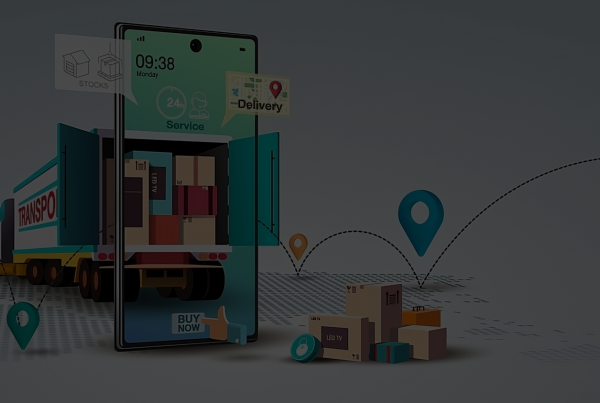


In today’s fast-paced business environment, logistics management plays a crucial role in ensuring the efficient movement of goods and services. However, traditional logistics processes are often time-consuming, prone to errors, and lack real-time visibility. Fortunately, with the advent of mobile app solutions, logistics management has been transformed, enabling businesses to streamline operations, improve productivity, and enhance customer satisfaction. In this blog, we will explore the numerous benefits of mobile app solutions for logistics management and how they are revolutionizing the industry.
Real-time Tracking and Visibility:
One of the key advantages of mobile app solutions in logistics management is the ability to gain real-time tracking and visibility. By equipping drivers, warehouse personnel, and managers with mobile apps, businesses can track shipments, monitor inventory levels, and receive instant updates on delivery statuses. This level of visibility enables proactive decision-making, reduces delays, and enhances customer service by providing accurate information about shipment whereabouts.
Efficient Fleet Management:
Mobile app solutions enable efficient fleet management by optimizing routes, monitoring fuel consumption, and tracking vehicle maintenance. With GPS integration and intelligent algorithms, logistics companies can plan and assign deliveries effectively, minimizing mileage and fuel costs. Mobile apps also facilitate communication between drivers and dispatchers, allowing for seamless updates, rerouting, and instant alerts in case of any disruptions or delays.
Paperless Documentation:
Traditionally, logistics management has been associated with extensive paperwork and manual documentation processes. Mobile app solutions eliminate the need for paperwork by digitizing various tasks, such as proof of delivery (POD), bills of lading, and invoices. By going paperless, logistics companies can significantly reduce administrative overhead, improve accuracy, and enhance overall efficiency.
Inventory Management:
Accurate inventory management is critical for logistics operations. Mobile app solutions provide real-time inventory tracking, allowing businesses to monitor stock levels, conduct audits, and automate replenishment processes. By leveraging barcode scanning or RFID technology, warehouse personnel can easily track and manage inventory, minimizing errors and stockouts. This leads to optimized inventory control, reduced carrying costs, and improved order fulfillment.
Enhanced Customer Experience:
Mobile app solutions empower logistics companies to deliver an exceptional customer experience. Customers can track their shipments, receive automated notifications, and access delivery history through user-friendly mobile applications. Additionally, mobile apps facilitate easy communication between customers and logistics providers, enabling swift query resolution and fostering trust and transparency.
Data Analytics and Insights:
With mobile app solutions, logistics management becomes data-driven. These apps generate valuable data on various aspects of the supply chain, including transportation, inventory, and customer behavior. By leveraging sophisticated data analytics tools, businesses have the opportunity to gain deep insights into their key performance indicators (KPIs), effectively identifying operational bottlenecks and making data-informed decisions that optimize overall operations, minimize costs, and pinpoint specific areas for improvement.
Conclusion
The introduction of mobile app solutions has brought about a revolutionary transformation in logistics management, presenting businesses with an array of unparalleled advantages such as real-time tracking, heightened visibility, streamlined operations, and an enhanced customer experience. Embracing mobile technology empowers logistics companies to maintain a competitive edge, boost operational efficiency, and provide exceptional service. Considering the ongoing evolution of the logistics industry, it is evident that mobile app solutions will continue to play a crucial role in modern logistics management, fostering innovation and shaping the industry’s future landscape.